Mountain View Dental Logo Pleasant View Utah

Mountain View Dental

Pleasant View Dental Office

(385) 324-3557 Pay Online Book Online
  • General Dentistry
    • Family Dentistry
    • Dental Exams
    • Teeth Cleaning
    • Dental Crowns
    • Dental Fillings
    • Tooth Extractions
    • Digital X-Rays
    • Fluoride Treatment
    • Root Canals
    • Dental Emergencies
    • Sedation Dentistry
  • Cosmetic Dentistry
    • Dental Implants
    • Smile Makeover
    • Teeth Whitening
  • About
    • Our Office
    • Meet The Team
      • Dr. Ryan Bateman
      • Dr. Dirk Lighthall
      • Dr. Stephen Smith
    • Pricing
    • FAQ
    • Blog
    • Testimonials
    • Pay Online
  • New Patients
  • Contact
  • Schedule Appointment

Home | Archives for % | Page 9

If you’re of the opinion that fluoride is a chemical additive to dental products that is of questionable safety, then you are not alone. Many people question if fluoride is safe, or if it is actually detrimental to your oral health. There are those who believe that fluoride is to be avoided at all costs, unless you want your teeth to suffer some terrible consequences. Is fluoride safe? Is it actually good for your oral health, or does it do more harm than good? Here’s what you need to know about fluoride and its safety. 
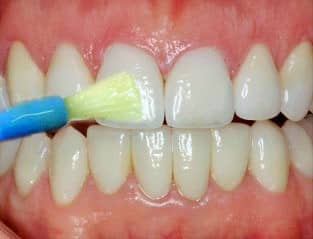
fluoride treatment on teeth Mountain View Dental Pleasant View UT

What Is Fluoride?

Fluoride is a naturally occurring mineral that is found throughout nature and the Earth’s crust, even in natural water and food supplies. It’s often referred to as nature’s cavity fighter, because of this, especially considering how fluoride works to strengthen your teeth and help to protect them from decay. Because fluoride is safe and has so many benefits for your oral health, many U.S. cities add it into the water supplies, in order to reduce the amount of cavities the general population gets. 

Fluoride is often used in dental practices to do what it does naturally: strengthen your enamel and stave off cavities. There are plenty of studies that have shown how fluoride in community water supplies and fluoride treatments at the dentist’s office decrease tooth decay. 

What Does Fluoride Do?

It’s important to take the best care of your oral health as possible – you only get one set of natural permanent teeth, after all. Fluoride helps with this, in how it fights off tooth decay. How fluoride strengthens your teeth and prevents cavities is interesting, and shows how fluoride is safe, because it does this through working with your mouth’s natural demineralization and remineralization processes. 

veneers vs crowns

Demineralization refers to when the bacteria in your mouth feeds on carbohydrates and sugar, which ends up weakening your tooth enamel – demineralizing it. Remineralization refers to when the calcium and phosphate ions that strengthen your enamel are replenished, which makes it so that your teeth are more protected, and less prone to decay.

Fluoride works with the demineralization and remineralization processes through protecting your teeth from the damage that demineralization can do to your teeth. It also helps with the replenishment of calcium and phosphate ions during the remineralization process. If your teeth lose too many minerals, this can lead to tooth decay. Fluoride protects your teeth, making it so that acids cannot damage your teeth as easily, which leads to stronger, healthier teeth. 

Is Fluoride Safe?

Yes, fluoride is indeed safe, when it is used properly and with appropriate doses. The same as everything else, it is possible for fluoride to become unsafe, when used incorrectly. Generally, fluoride carries the highest risk for children, if they are exposed to too much fluoride over an extended period of time. This can result in a condition called dental fluorosis, which is when children’s teeth become discolored or have white lines or spots on the enamel. 

Mountain View Dental Pleasant View UT

Dental fluorosis typically affects children who have not yet had their permanent teeth come in. There are cases with long-term exposure to excessive levels of fluoride that can result in a condition called skeletal fluorosis, which can also affect adults. Skeletal fluorosis is when your bones are affected. 

However, these conditions are rare, and avoidable through using fluoride in the recommended dosages and ways. Fluoride is very safe, it is simply the same as anything else – too much water can make you sick, but that doesn’t mean that water is bad for you. The Centers For Disease Control And Prevention (CDC) has confirmed that fluoride is safe and that there is no evidence that fluoride causes adverse health effects when used correctly. 

Additionally, the American Dental Association (ADA) shows that there are over 125 organizations world-wide that recognize the safety, legitimacy, and benefits of fluoride for your oral health, including the World Health Organization. Is fluoride safe? Yes. When used correctly, it very much is, and is in fact an important part of maintaining good oral health! 

How To Get The Benefits Of Fluoride

Now that we’ve established how fluoride is safe, there are several things that you can do in order to ensure that you are getting those vital benefits fluoride provides, with stronger teeth and lessened tooth decay. You can get the benefits of fluoride through fluoride treatments from the dentist, through fluoride toothpastes and mouthwashes, through fluoride in your water, through fluoride supplements, and more. 
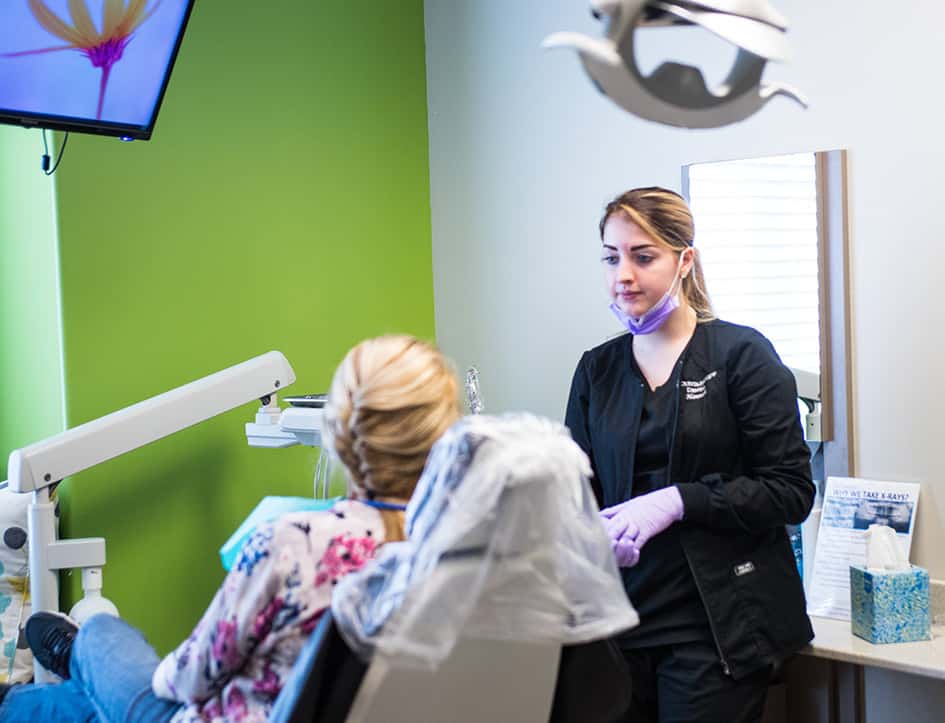
Fluoride Treatment Pleasant View UT Mountain View Dental

Mountain View Dental can help you ensure that you are both using fluoride correctly and that you are getting enough in order to maintain strong, healthy teeth. We offer professional fluoride treatments designed to improve your dental health, and are more than happy to advise you on the best way for you, personally, to use fluoride. Contact us today, and let’s get your mouth at healthy as can be!
Filed Under: Teeth Whitening

So, you’re at the dentist and they say that you need to have some work done on your teeth that goes beyond a filling. If it’s too much for a filling to fix but not bad enough for you to need an entirely new tooth, you may need a veneer or a crown. Although veneers and crowns both go over your natural tooth, they have different purposes and aren’t interchangeable. Here’s what you need to know about veneers vs crowns so that you can understand which is best for you and why your dentist might recommend one over the other. 

The Differences Between Veneers Vs Crowns

veneers vs crowns Pleasant View, UT

While some can get confused about the differences between veneers vs crowns – understandably – they won’t work for the same kinds of issues. While both veneers and crowns are kinds of dental restoration procedures that improve how your teeth look and function, the one your dentist will recommend will depend on the problem that you’re trying to have fixed and the condition your teeth are in. 

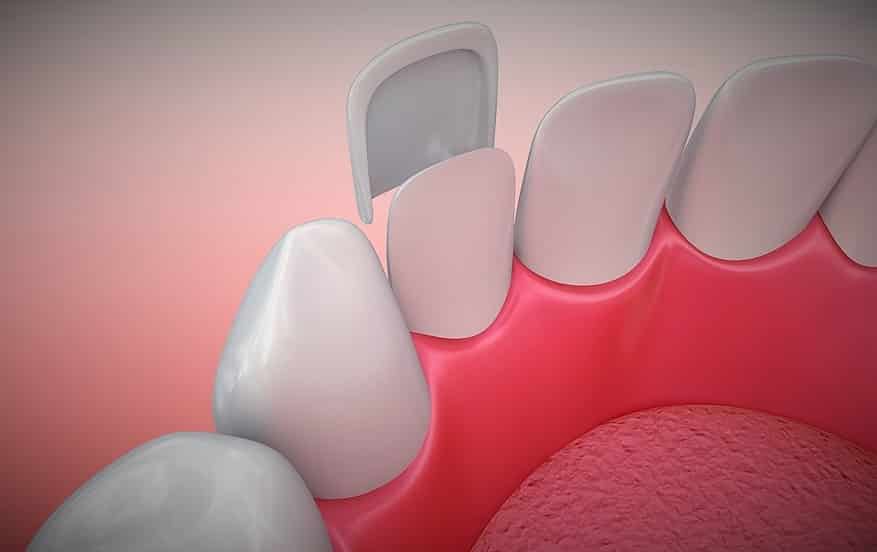
The key difference between veneers vs crowns is that veneers only cover the front part of your tooth while crowns cover the entire thing. But the differences between veneers vs crowns go beyond how much of your tooth they cover. Let’s go over veneers and crowns and their unique purposes to better explain the differences between veneers vs crowns. 

Veneers

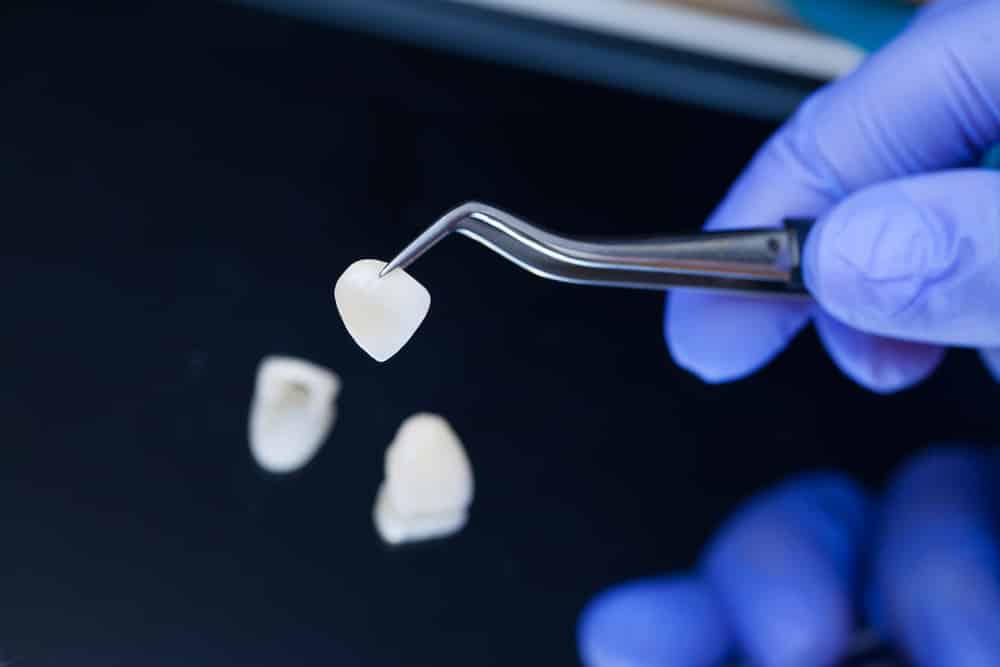
As previously mentioned, a veneer is a type of dental restoration that involves a thin layer of porcelain or another kind of material that is bonded to the front of your tooth that is thin enough to feel like part of your real tooth. 

Mountain View Dental best partial dentures

Why You Would Get Veneers

Veneers are unique in that sometimes people get them not only to fix dental problems but also for aesthetic reasons. People will get veneers if they’re unhappy with their smile, like if their teeth are yellowed or stained or have a number of other aesthetic problems, such as chipping, irregular shapes, uneven spacing, and more. Veneers enhance your smile by providing a new surface for the front of your existing teeth. If the surface of your teeth are harmed or make you self-conscious, veneers can be a solution for you. 

The Process Of Getting Veneers

Before you can get a veneer, your dentist will need to ensure that you have enough enamel in order to sustain it, for it to affix to. After that, they’ll trim the enamel of the front of your tooth in order to make it rough enough for the veneer to bond to while still leaving a good portion of your natural tooth intact. They then make an impression of your tooth or make a mold in order to send to a lab to make your veneer. They may put a temporary veneer on your tooth, depending on how much it was ground down. Once the permanent veneer is ready, they’ll bond it to your tooth with a dental cement. 

Crowns

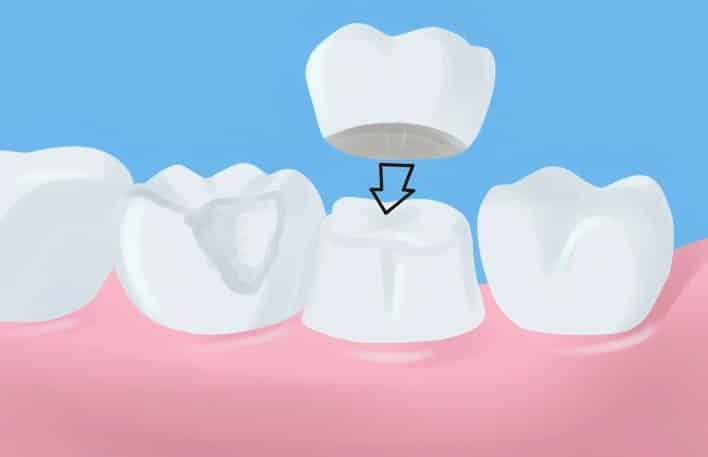
As mentioned before, the key difference between veneers vs crowns is that crowns cover your entire tooth. Crowns don’t preserve as much of your natural tooth as veneers do because of this, since your tooth needs to be ground down in order for the crown to fit over it. In some cases, it may need to be built up, such as if there is significant decay. 

Tooth Crown Process Mountain View Dental Pleasant View UT

Why You Would Get Crowns

While veneers are typically used for more aesthetic concerns, crowns are more often used in cases of significant decay or damage. Crowns can be used to cover discoloration, but they’re more needed in cases where your tooth has been severely damaged, cracked, broken, worn, decayed, or is weak and needs protection. They’re also used to hold dental bridges in place. 

The Process Of Getting Crowns

Similar to veneers, crowns require your natural tooth to be ground down and for your dentist to make an impression or mold of it to send to a lab in order to make your permanent crown. They’ll put a temporary crown on while your permanent one is being made, then cement the permanent one in place with a dental cement. 

Veneers Vs Crowns: Which Is Right For You?

If you’re wondering about what kind of dental restoration you’ll need and curious about veneers vs crowns, your dentist will be able to tell you based on the kinds of dental concerns you’re facing. For example, if your tooth has very minor damage or just cosmetic issues and is virtually entirely intact, you could go with a veneer. But if it has significant decay or damage or has a large filling that is beginning to fail, you’re better off with a crown. 

Do You Want To Learn More About Veneers Vs Crowns?

veneers vs crowns

Mountain View Dental offers both veneers and crowns. While there are differences between veneers vs crowns, they both are great options for their intended purposes. Whether you need veneers or crowns, we can help you out. If you’re wondering about which one you’ll need, don’t hesitate to contact us today and set up an appointment. We want to help you have strong healthy teeth and a smile you can feel confident in. 

Filed Under: Teeth Whitening

As much as we strive to care for our teeth, sometimes we can’t always keep them. In some cases, the best thing to do for our oral health is not to have a filling or a crown, but to have a tooth removed entirely. With modern medicine, extractions, regardless of if they are simple or surgical, are nothing to fear and will in fact benefit your oral health in the long run, if you need to have them done. Here’s what you need to know about simple vs surgical tooth extractions. 

Reasons Behind Tooth Extractions

simple vs surgical tooth extraction what to expect after tooth extraction Pleasant View UT Mountain View Dental

There are many reasons why people need to have teeth extracted. They range from how much space is in your mouth, to the underlying conditions, to the state of your tooth itself. Some of the most common reasons why people end up needing tooth extractions include:

Overcrowding

If there isn’t enough space in your mouth for all of your teeth, your dentist can remove some to prepare for other treatments, like orthodontics.

Infection

In many cases, the dentist can take out decay and install a filling, but if that decay reaches the pulp of your tooth, you may end up needing an extraction to prevent it from spreading to other parts of your mouth.

Impacted Wisdom Teeth

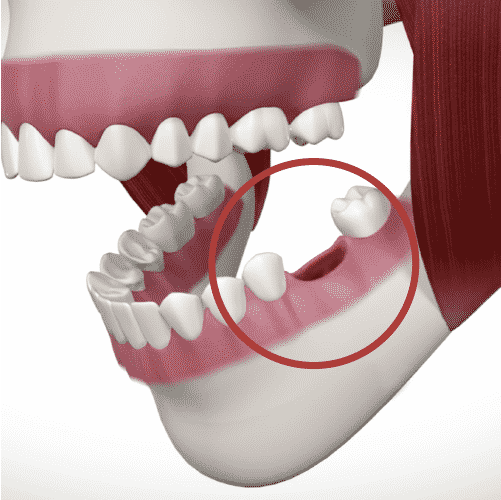
Since wisdom teeth are the last set of molars to come in, they often don’t have enough space to come in fully. This leads to only part of the tooth getting above the gumline, while the rest stays under. These are often painful and can result in further dental issues, meaning that these need extractions.

These are but three of the many reasons why people need to get teeth extracted. With how many potential causes there are, it makes you wonder which kind of extraction is better for which kind of problem, simple vs surgical tooth extraction. Here’s what you need to know.

Types Of Tooth Extractions

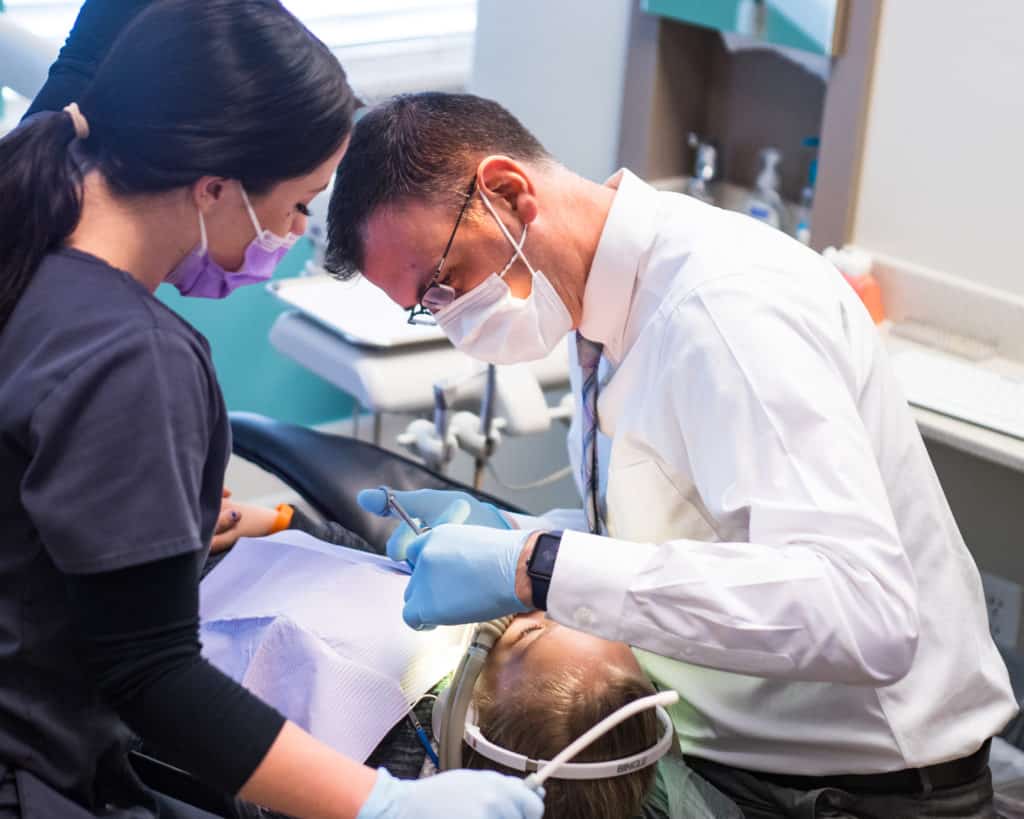
Mountain View Dental Pleasant View UT

In general, there are two different types of tooth extractions: simple and surgical. The key difference with simple vs surgical tooth extractions lies in the nature of the tooth that needs to be extracted and the structures around it.

Simple Extractions

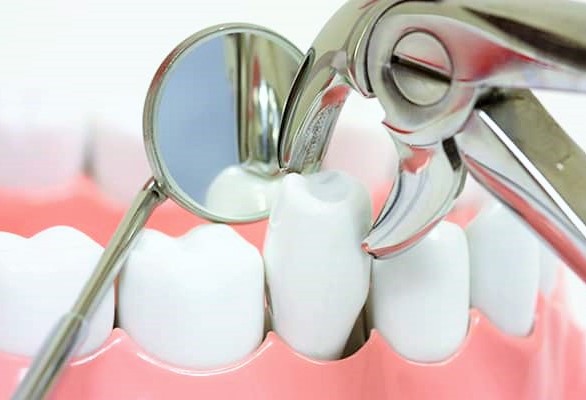
Simple extractions are not a surgical procedure. This kind of tooth extraction is typically done on a visible tooth, and you can go to your usual dentist for this kind of extraction. Simple extractions generally only need local anesthesia in order to numb the pain, though you can be sedated, if need be. Your dentist simply wiggles the tooth out of its socket with dental tools, and you are back to normal within days after the procedure.

Surgical Extractions

As you may expect, surgical extractions are more involved than simple extractions. Generally, you won’t go to your typical dentist for this kind of extraction, but would rather be referred to a specialist. This is because surgical tooth extractions involve the structures under your gums, not just a visible tooth. An extraction turns surgical when your dentist would need to remove any gum or bone tissue in order to extract the tooth.

Since it is a more involved surgical procedure, you’ll need high levels of anesthesia or sedation. After the extraction, your dentist will stitch you back up and likely will end up prescribing you something for the pain while you heal.  

Some examples of when you’d need surgical extractions are wisdom teeth, if your tooth is broken at the gumline, or the tooth has a long-curved root.

What To Do After A Tooth Extraction

Pleasant View Dental UT Mountain View Dental Extractions

With how medicine has progressed, there’s no need to fear tooth extractions. With painkillers, professional training, and scientifically informed procedures and recovery recommendations, you’ll be back to normal soon after your procedure. It stands to reason that the recovery time between simple vs surgical tooth extractions varies, seeing as surgical extractions are much more involved.

After your extraction, you can expect gum bleeding, which can be controlled through biting on gauze until a blood clot forms. This blood clot will seal the socket where the tooth was and assist in healing. If you have a surgical extraction, you’ll have stitches to be mindful of. You’ll want to ensure that you rest your mouth, stick to soft foods and liquids, and follow your dentist’s recommendations about brushing and pain killers. 

Do You Have Questions About Simple Vs Surgical Tooth Extractions?

Mountain View Dental knows that sometimes the best thing to do for your oral health is to remove a tooth that cannot be saved or that is causing problems. We can perform simple extractions and refer you out to a specialist for any surgical extractions. For any questions about simple vs surgical tooth extractions or about any of our other dental services, please contact us at Mountain View Dental today!

Filed Under: Teeth Whitening

  • « Previous Page
  • 1
  • …
  • 7
  • 8
  • 9
  • 10
  • 11
  • …
  • 61
  • Next Page »

Dentist Office

2797 U.S. 89 #201
Pleasant View, UT 84414

(385) 324-3557
[email protected]
Monday 8 AM - 5 PM
Tuesday 8 AM - 7 PM
Wednesday 8 AM - 7 PM
Thursday 8 AM - 7 PM
Friday 8 AM - 3 PM
Saturday 8 AM - 12 PM
Sunday Closed

Quick Links

New Patient
Schedule Appointment
FAQ

Proudly accepting new patients from: Pleasant View, North Ogden, Harrisville, Farr West, Marriott-Slaterville, Ogden, Plain City, South Willard, Willard and Perry!

Contact Us

This field is for validation purposes and should be left unchanged.

Follow Us

Popular Content

  • General Dentistry
  • Family Dentistry
  • Cosmetic Dentistry
  • Dental Crowns
  • Dental Exams
  • Dental Implants

© 2026 | Mountain View Dental | All Rights Reserved | Accessibility | Anti-Discrimination | Healthcare Disclaimer | HIPAA Privacy Policy | Privacy Policy | Terms | XML Sitemap | Sitemap | Site by PDM