
Oral cancer is defined as a malignancy impacting any portion an afflicted individual’s mouth including the gums, palate, tongue, lips, and cheeks. The following brief blog will touch on important issues related to this serious health malady such as symptoms people should look out for, oral cancer causes, and possible treatment options.


If you are a parent who is concerned about your children’s teeth, then encouraging frequent oral health care with brushing and flossing is essential. When your infant has her first baby tooth, you should clean it with a soft cloth while your child sits in your lap. As your children become toddlers, it is time to buy them small and soft toothbrushes that they can hold in their hands. One of the best ways to help your toddler learn about brushing his or her teeth is by having them watch you. Children don’t like hot (strong minty) flavors of toothpaste, so buy toothpaste that is formulated with milder flavors that might taste similar to strawberries or oranges. In addition, have a mirror on the wall of a bathroom that is at a lower level so that your toddler can see how to brush her teeth correctly.
Use a Variety of Different Ways to Make Brushing Fun and Educational
When your child doesn’t enjoy brushing their teeth, you can make the process fun in a variety of ways, including:- Playing music while they brush their teeth
- Permitting a child to choose their own toothbrush and toothpaste
- Having older siblings teach younger sibling how to brush
- Watching CDs about dental care that are made for children
- Drawing pictures about brushing and flossing
- Have battery-operated toothbrushes available
- Letting your toddler brush a doll’s teeth
- Praising your child’s efforts while they brush their teeth
- Giving your child a sticker for brushing their teeth
- Reward systems such as trips to the zoo, park, or a museum
- Look for kid-friendly smartphone Apps about oral health care
- Find library books about brushing and flossing
- Buy a musical toothbrush
- Set an alarm clock to remind a child about brushing their teeth
- Write a story about brushing teeth and what happens when you don’t
- Help your child brush the family pet’s teeth with a special toothbrush and toothpaste
- Use a timer while brushing to ensure that it is done correctly
- Dance and sing silly songs while brushing
- Supervise while your child also uses an oral irrigator
- Cut egg cartons to paint the sections to make fake teeth for practicing brushing

Bring Your Child to Our Dentist’s Office Every Six Months
You should bring your child to a dentist’s office while he or she is an infant so that they become accustomed to the sounds, sights, and odors in the facility. An early examination can find problems that require intervention with specialized treatments. More importantly, a good dentist will make the process fun by having a play area with a television or computer to watch cartoons about proper dental care. In addition, the dental office may provide coloring books about brushing and flossing along with fun toothbrushes. Call us at Mountain View Dental in Pleasant View, Utah today at 385-324-3557 to learn more about your children’s teeth and proper dental care in our comfortable dental facility.Oral health takes daily work since the teeth and gums do not naturally clean themselves. It also requires regular dental checkups for routine exams and teeth cleaning. Failing to practice proper oral hygiene can lead to oral problems such as cavities, gum disease, or gingivitis.
What is Gingivitis?
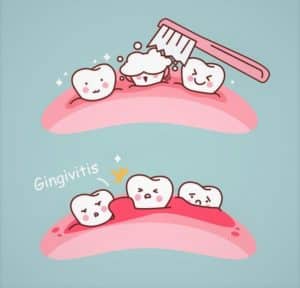
Gingivitis is the medical term for inflammation of the gum. It is different from gum disease and is caused mainly by the buildup of plaque on the tooth’s surface. Plaque is an off-white, creamy film containing bacteria that sticks to teeth when food particles are not removed by brushing or flossing. It eventually calcifies or hardens into tartar. Plaque produces toxins that irritate the gum and cause it to become inflamed. No amount of brushing can remove tartar from your teeth or gum line.Gingivitis Symptoms
Gingivitis symptoms are usually easy to spot if you pay close attention to your teeth and gums when brushing. Common gingivitis symptoms are:- Bleeding gum (especially when brushing or flossing)
- Gum appears red or puffy (inflamed)
- Soreness of the gum that persists
- Bad breath
- Loose tooth
- A toothache
- Sensitive tooth
Gingivitis Treatment
Gingivitis should be treated as soon as possible to prevent dental complications. Untreated gingivitis commonly leads to periodontitis or gum disease. The disease destroys the tissue or bone that holds your teeth in place. Before treating you, your dentists will examine your gum for inflammation and signs of infection in the periodontal pockets. In treating you, your dentists will remove the plaque and tartar from your teeth and under your gum using a special dental tool. Root planning may also be done to remove plaque and tartar from the root surface. If medication is needed, you will be given antibiotics. In severe cases, flap surgery may be done to lift the gum to remove plaque and tartar from the periodontal pockets. After treatment, it is important to continue at home by regularly brushing, flossing, and rinsing with antiseptic mouthwash. This will form part of preventative care.Preventing Gingivitis
Plaque can still accumulate on teeth even with regular brushing and flossing. It can get under the gum and cause symptoms of gingivitis. Preventative care protects against periodontitis, tooth decay, and extractions, and avoids the need for prosthetic teeth, e.g., implants, bridges, or dentures. Here are a few tips to help prevent gingivitis from occurring or recurring:- Brush at least twice a day for about 2-3 minutes
- Brush in a circular motion to clean the gum line
- Floss at least once a day
- Replace toothbrushes every 3 months
- Examine your gum regularly for signs of gingivitis
- Use anti-gingivitis toothpaste and mouthwash
- Get routine dental checkups
- « Previous Page
- 1
- …
- 49
- 50
- 51
- 52
- 53
- …
- 61
- Next Page »